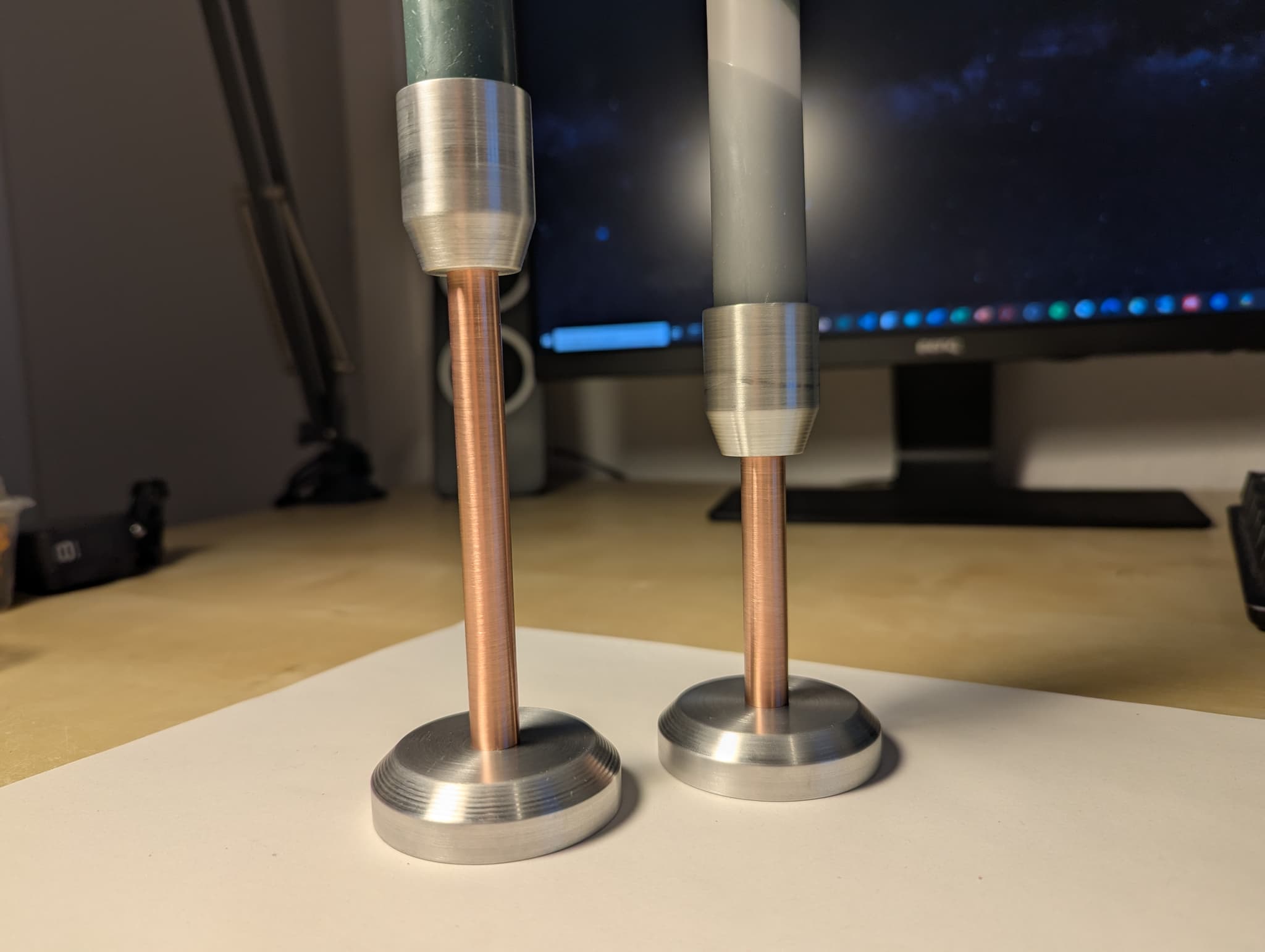
Sieg SC4 lathe belt-drive conversion
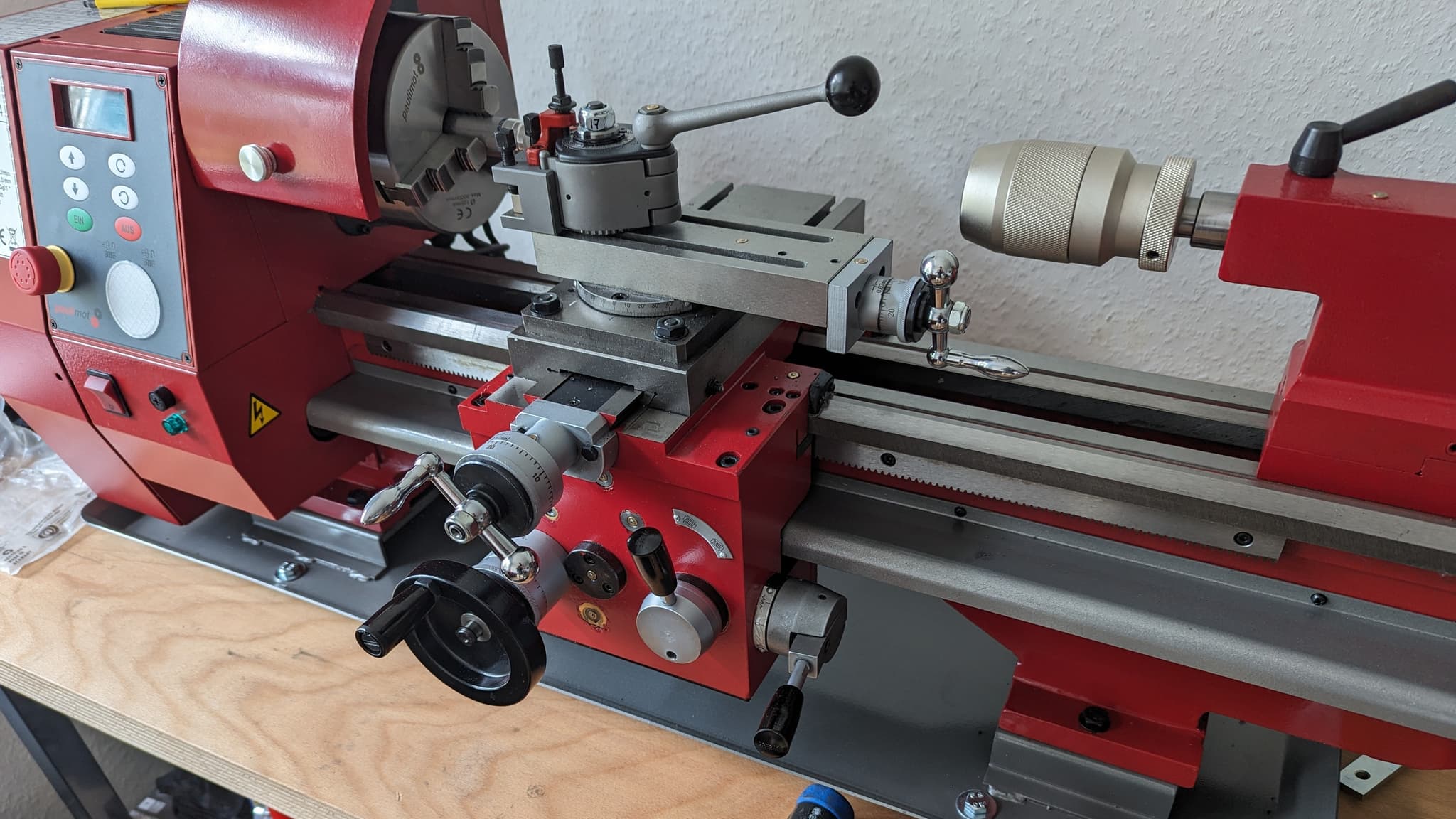
1. Problem
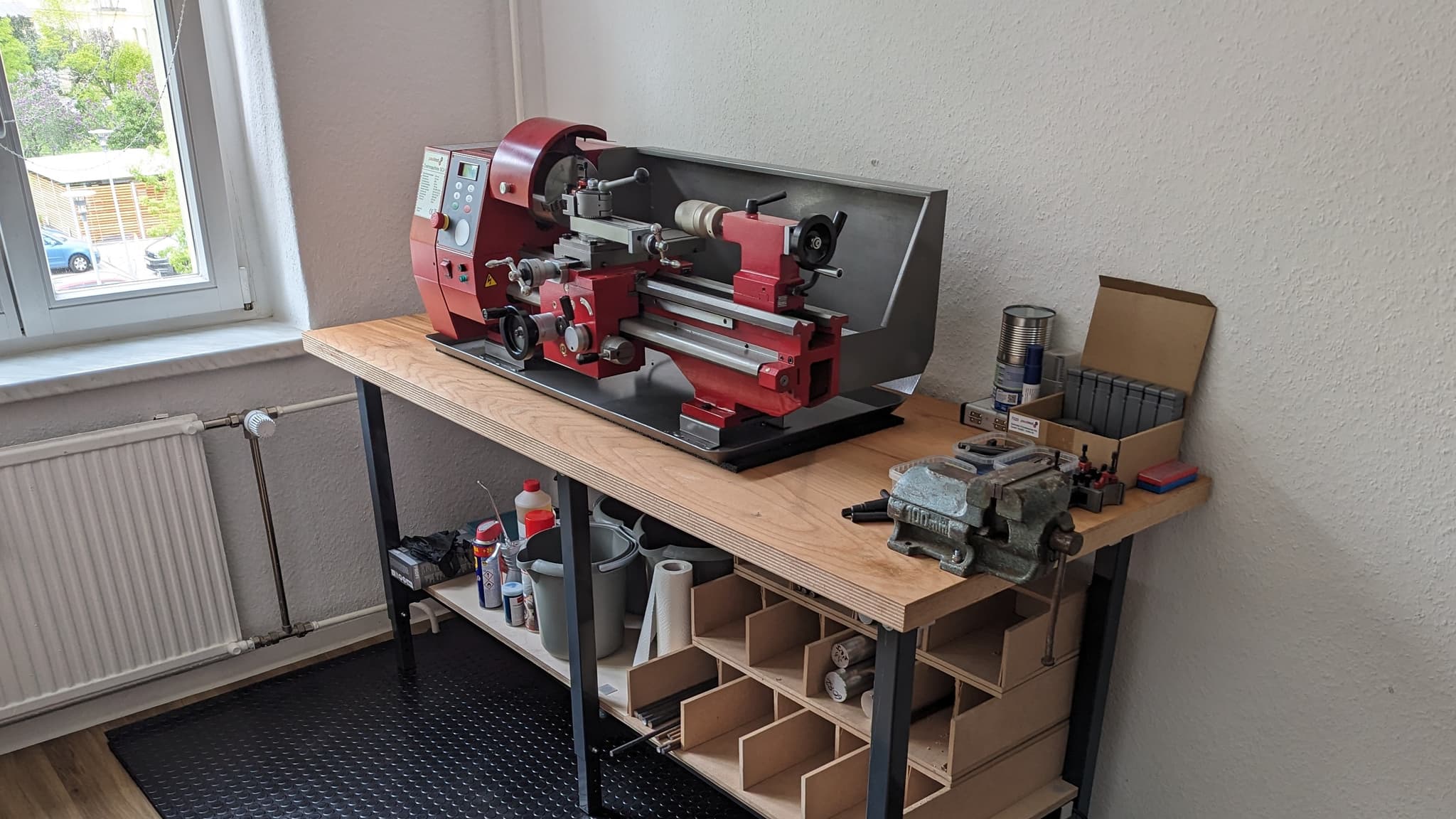
I keep my lathe in my 2nd floor rented apartment... Yes hauling up this >100kg chunk of metal was no easy feat. However the straight-toothed spur gears that transfer torque from the intermediary shaft to the main spindle were loud enough to make optimal spindle speeds unbearable for both myself and potentially the neighbours — 87 dB at just 1000 rpm, roughly the volume of a food blender running continuously... And I wasn't about to carry it down anytime soon.
The gears also had significant backlash and a poor fit on their shafts, both of which affected machining precision. Measured spindle runout sat between 0.02–0.03 mm.
2. Approach
Replace the spur gear pair (viewer left) with a matched set of HTD timing pulleys and a 5M-profile belt (viewer right) — the same belt type already used between the motor and intermediary shaft. At the same time, swap all four headstock bearings for higher-quality SKF units to address the runout.
3. Conversion Parts List
| Quantity | Part | Specification |
|---|---|---|
| 1 | Spindle bearing (front) | 32007 X SKF — 35×62×18 |
| 1 | Spindle bearing (rear) | 6206-2RS1 SKF — 30×62×16 |
| 2 | Intermediary shaft bearings | 61903-2RS1 SKF — 17×30×7 |
| 2 | Timing pulleys | HTD ZRS 30-5M-15 (both modified on-lathe to fit shafts) |
| 1 | Timing belt | 265-5M-15 |
| — | Circlips, bearing grease | New circlips for both shafts and high temp grease |
The full conversion cost came to roughly €95.
4. Conversion
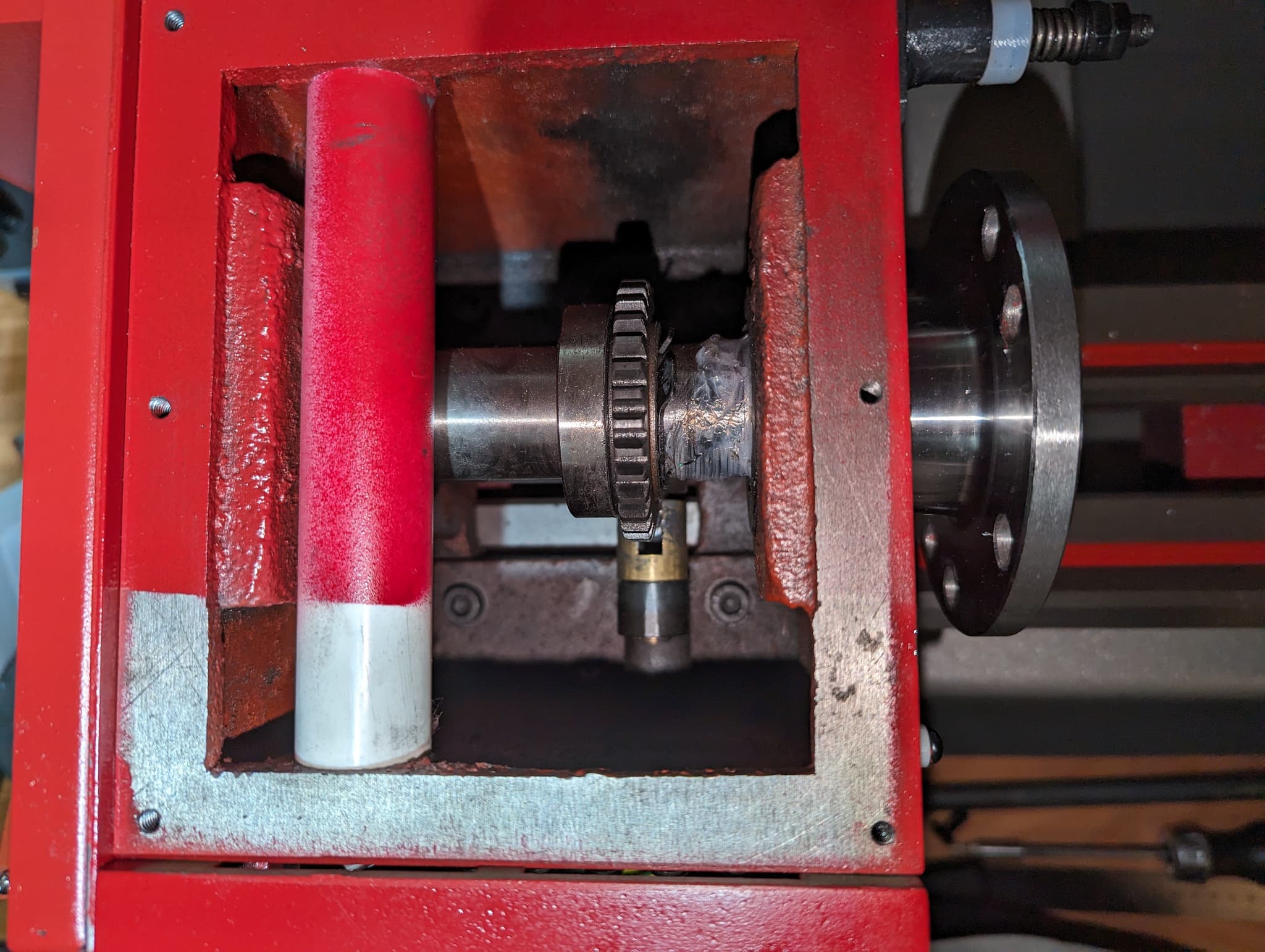
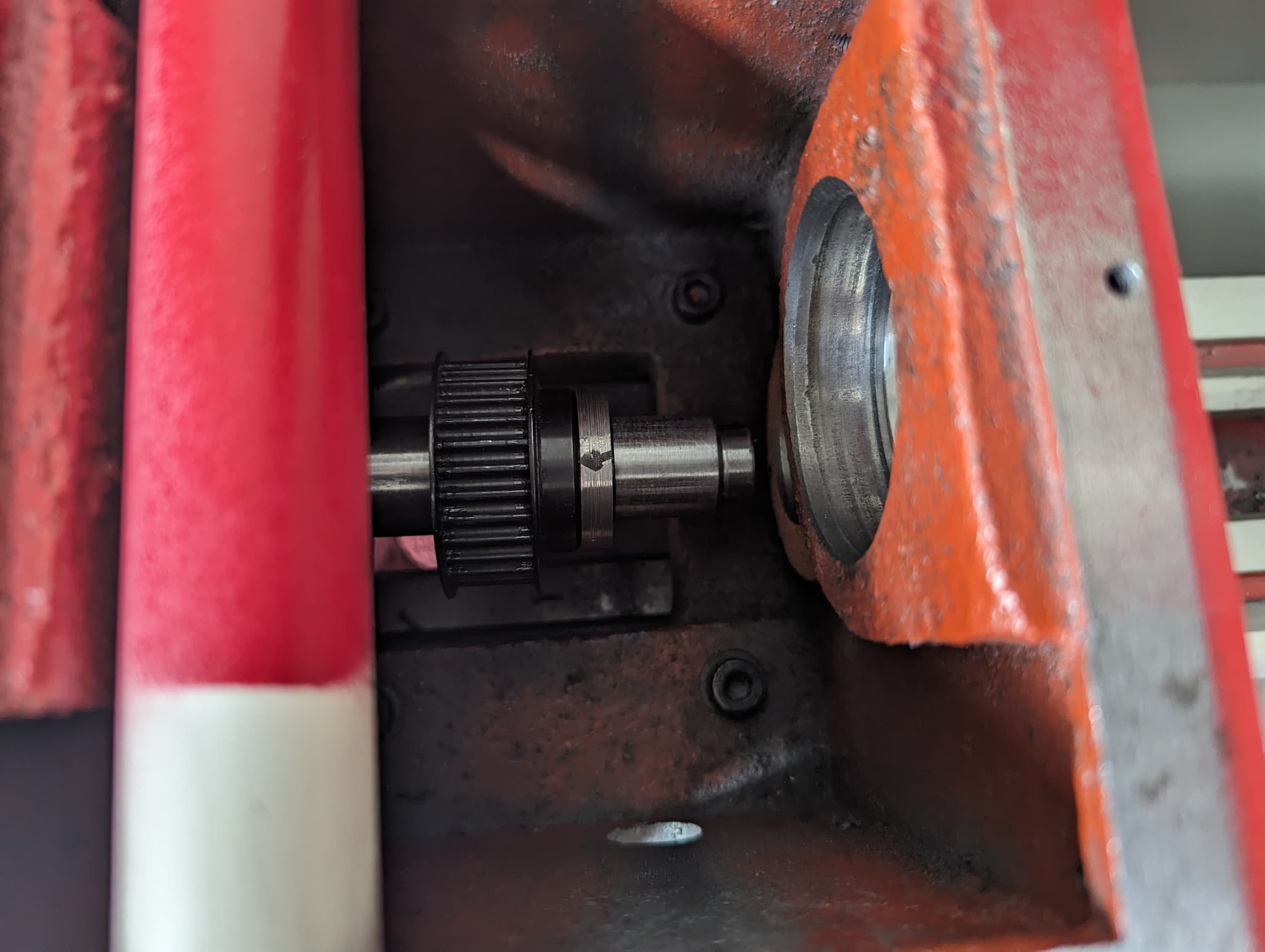
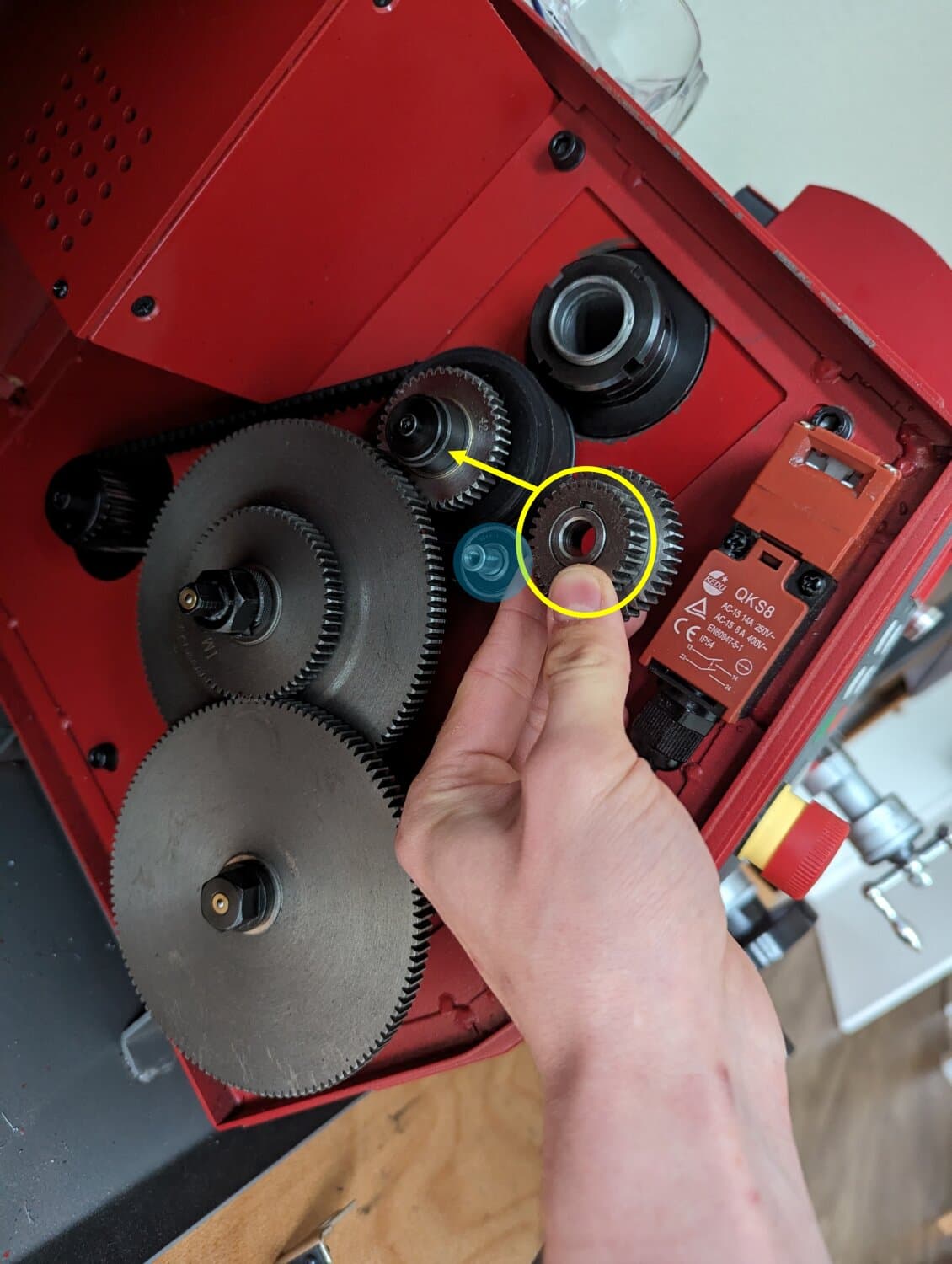
A view inside the headstock… The straight toothed gears had a great deal of backlash and aren’t a great fit on the shafts. The bottom gear can be disengaged via a knob on the control panel. This is because a milling attachment can be used with the lathe and this disengagement stops the main spindle from spinning while carrying out milling operations. As I won’t be using a milling attachment this function isn't necessary. The parts on the right need to be brought into the housing.
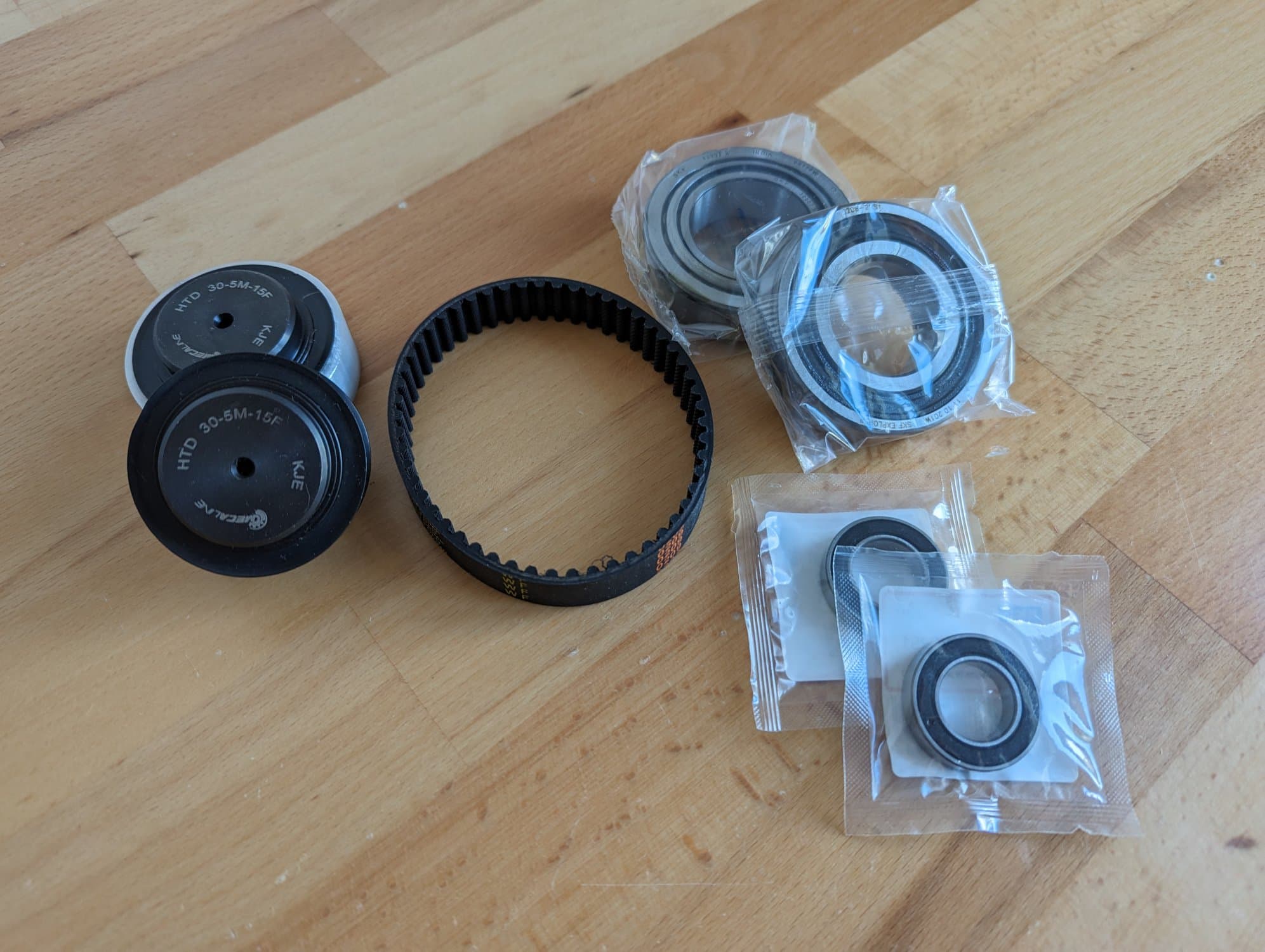
Before disassembling the headstock, I turned the pulleys to their final bore diameters. The critical ID cuts were done on a second lathe so the fit could be test-checked against the actual shafts during machining.
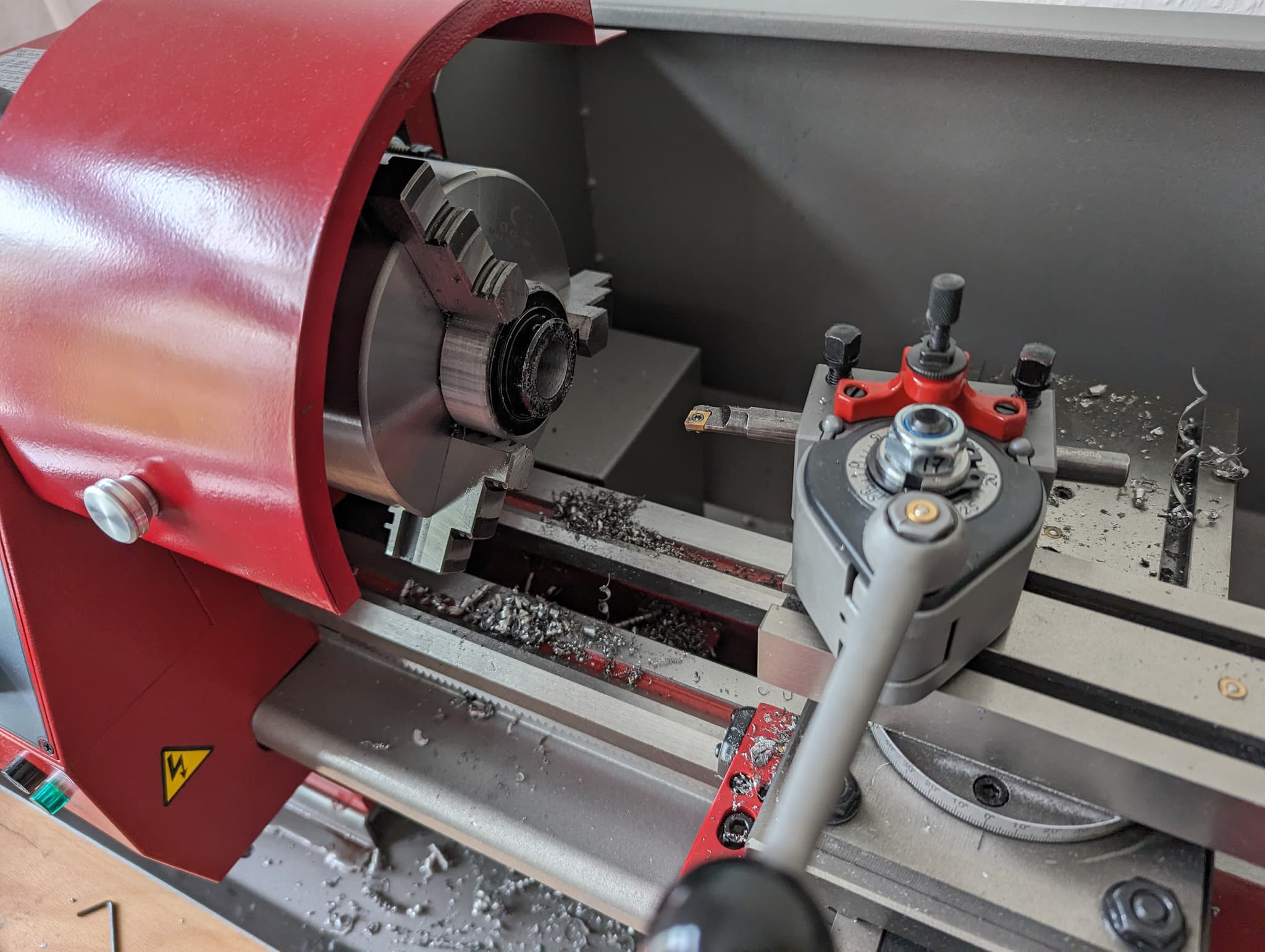
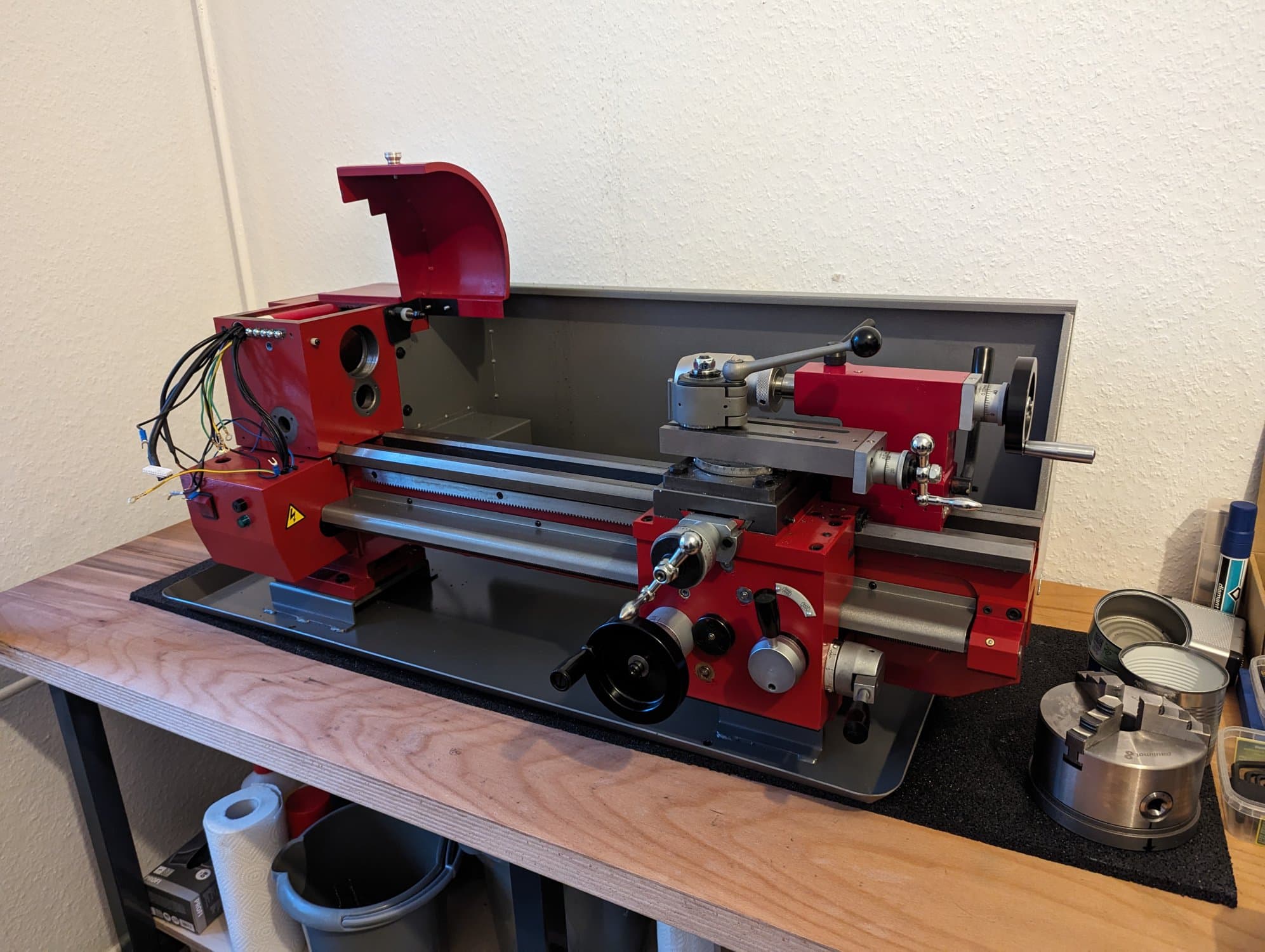
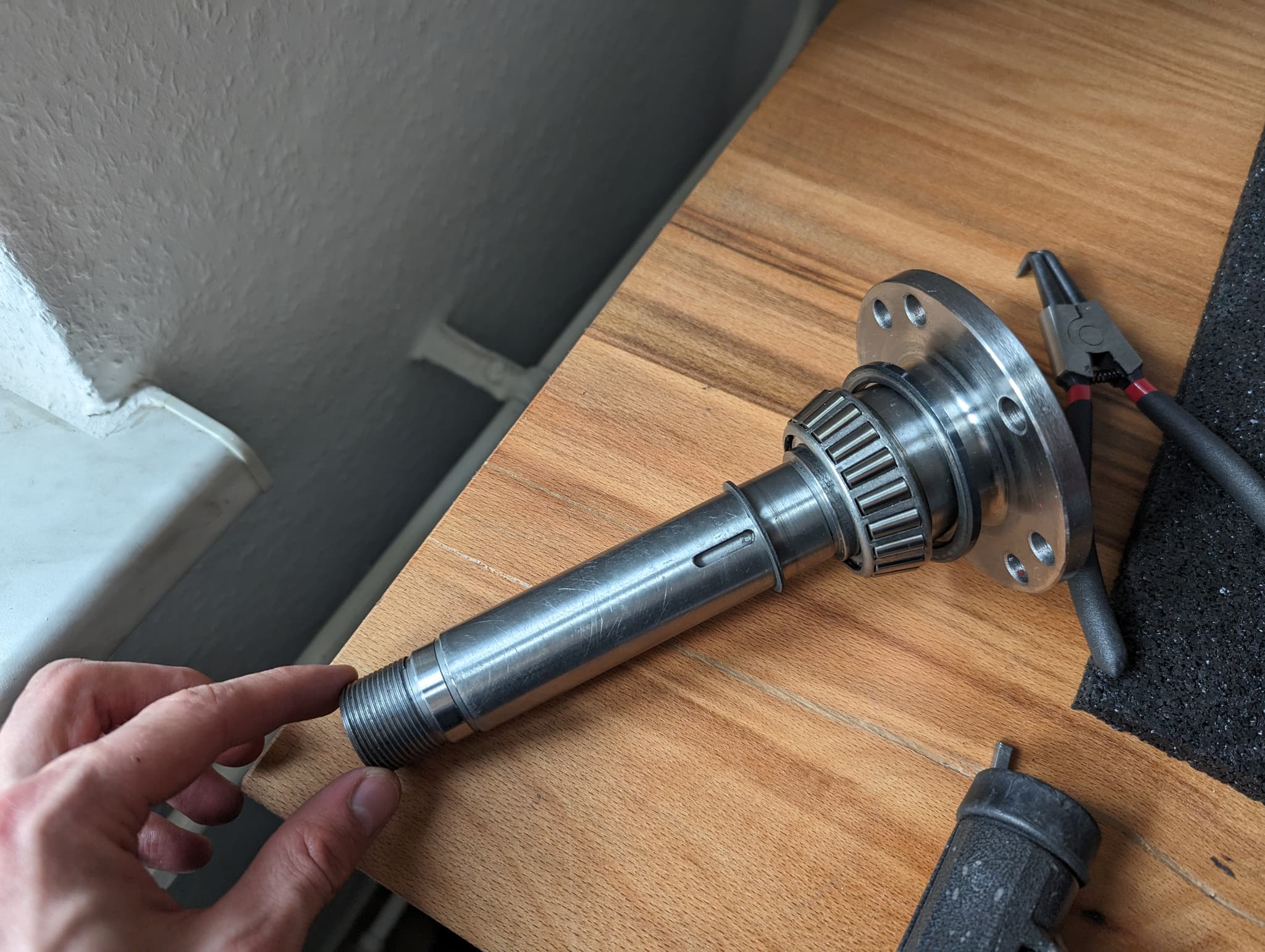
Fully disassembled — out with the old.
And in with the new:
Timing belt, new SKF bearings and pulleys in place. The gear disengagement knob was removed and the tensioner assembly fitted in its position. The is a thread driven arm with two roller bearings which keeps consistent belt tension.
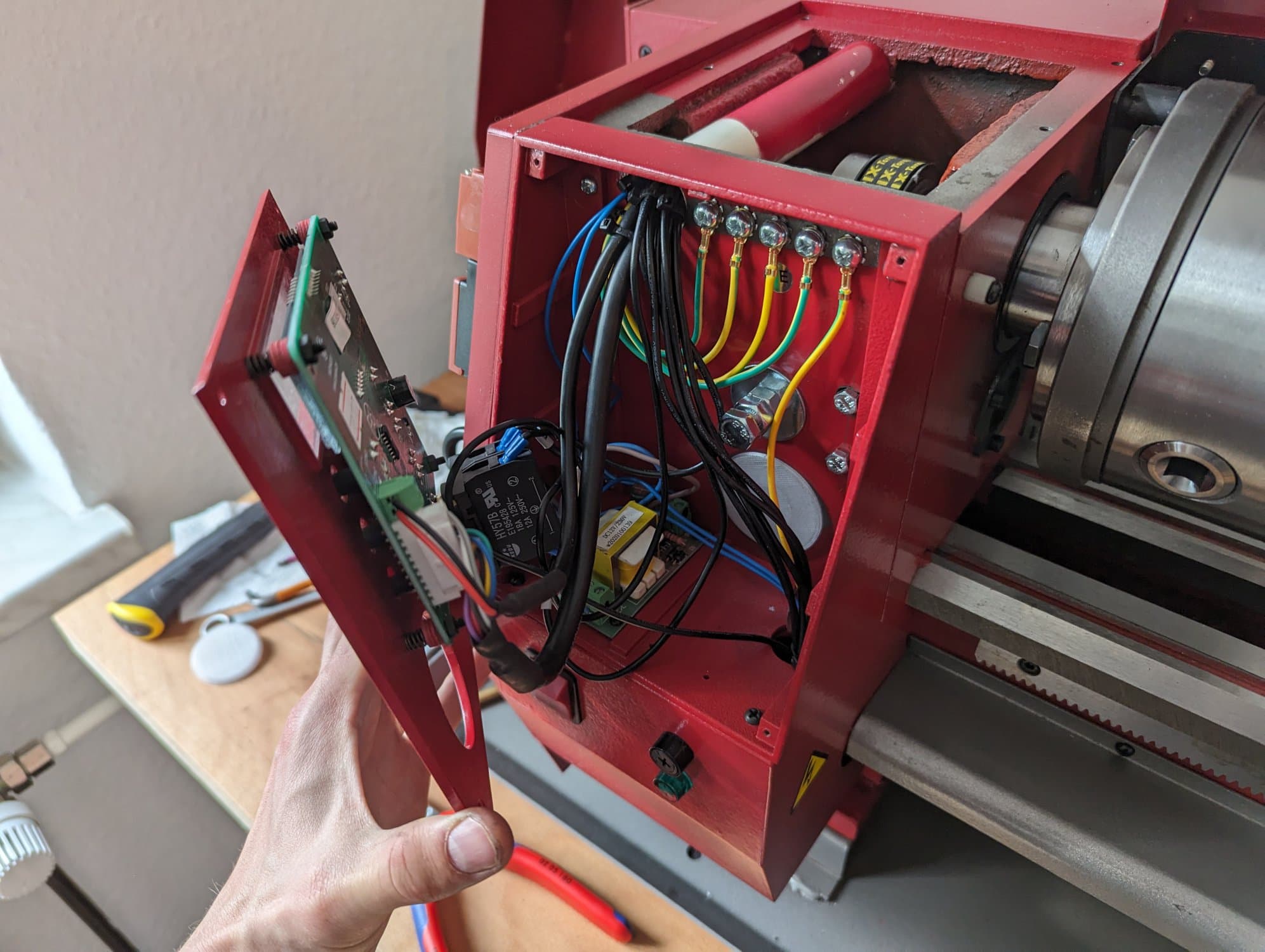
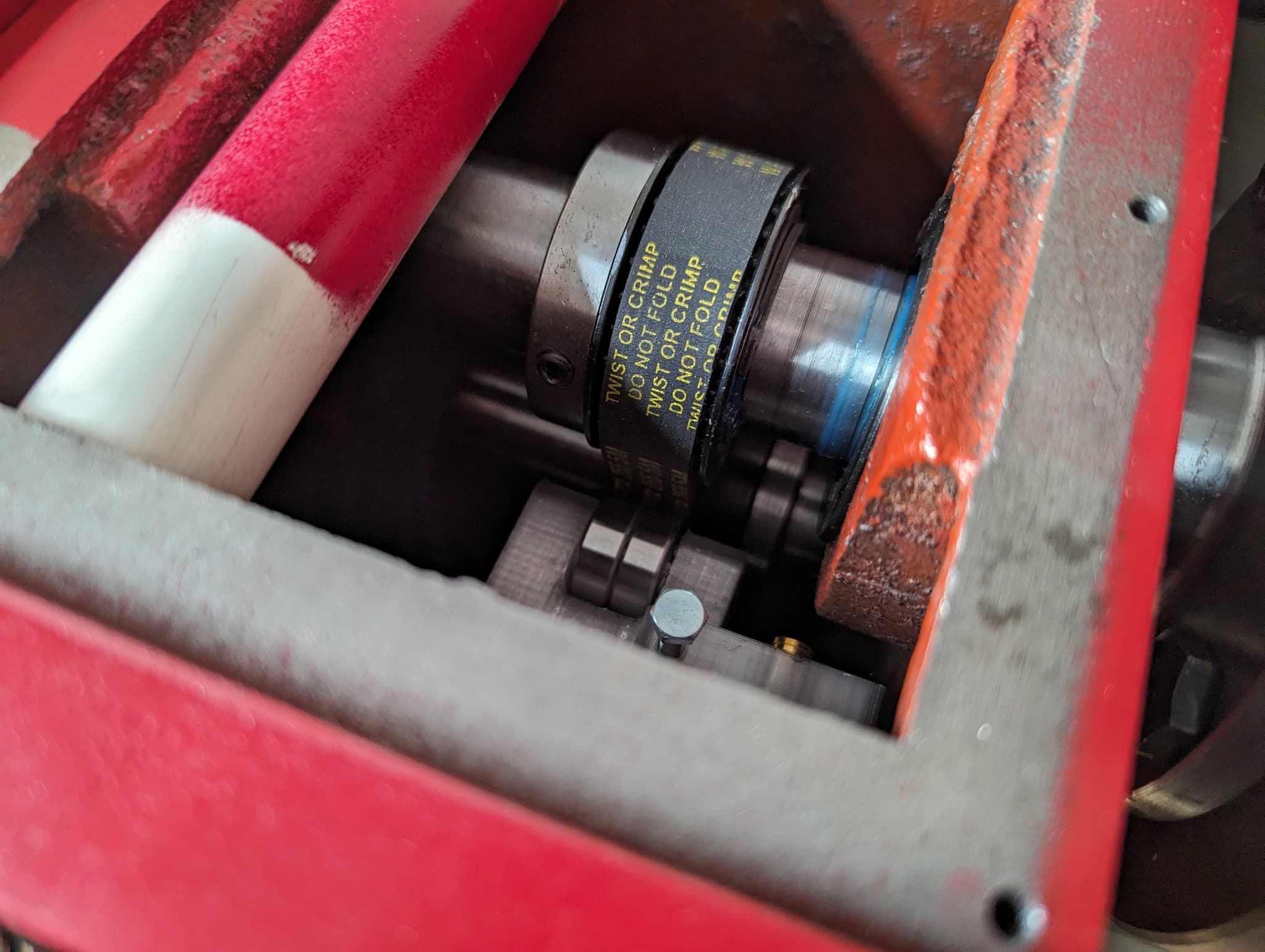
All back together and running significantly quieter than before.
5. Results
| RPM | Before (dB) | After (dB) | Reduction |
|---|---|---|---|
| 500 | 80 | 68 | -12 |
| 1000 | 87 | 73 | -14 |
| 1500 | too bloody loud | 77 | - |
| 2000 | too bloody loud | 80 | - |
All measurements taken with the leadscrew gears disengaged. A 10 dB reduction roughly halves perceived loudness — the 14 dB drop at 1000 rpm is the difference between uncomfortable and tolerable.
Check it out for yourself on this demo noise level video↗.
Additionally, the SKF bearing upgrade brought spindle runout down from 0.02–0.03 mm to 0.01 mm.
6. Note
7. Gallery of Turned Parts